
Mastercam Mill 3D Hybrid Finishing
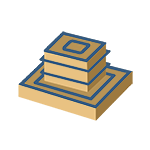
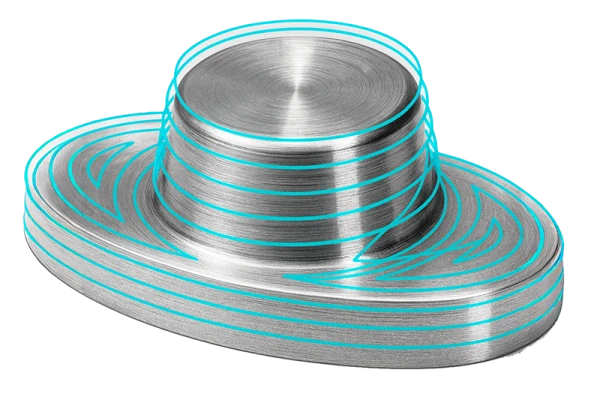
Mastercam Mill 3D Hybrid Finishing is an advanced toolpath that combines two different finishing strategies into a single seamless operation. It simultaneously machines steep, shallow, and flat surfaces using the most suitable method for each: Constant Z for steep areas and Constant Scallop or Parallel finishing for shallow and flat areas. This achieves a consistent surface finish across the entire part without requiring the user to create separate toolpaths for different areas.
The advantage of Hybrid Finishing is that it reduces programming time and the number of machining operations. The toolpath maintains consistent surface roughness across the entire part while optimizing tool movements, eliminating unnecessary air moves and shortening machining times.
Features
- Automatic strategy selection: Uses Constant Z in steep areas and Constant Scallop or Parallel finishing in shallow areas.
- Boundary control: Users can define boundaries manually, such as chained curves, or automatically, and select the compensation direction: inward, toward the center, or outward.
- Geometry control: Allows machining, avoidance, and fixture geometry to be defined separately with individual stock allowances for walls and floors.
- Depth ranges: Z limits can be used to set the minimum and maximum depth so that the toolpath is applied only to the desired area of the part.
- Tool movements and approaches: Supports ramping, tangential approaches, versatile exit moves, and tool retract control.
- Flat areas: Dedicated settings allow flat areas to be handled separately and ensure that they are finished with consistent surface roughness.
- Optimization: Includes settings for optimizing the cutting order to improve machining efficiency and keep tool loading consistent.
Applications
- Complex 3D workpieces containing both steep and shallow surfaces.
- Molds, castings, and other parts that require a high-quality finish in a single operation.
- Especially suitable for situations where programming time needs to be minimized and the use of multiple separate finishing toolpaths avoided.
- Parts where flat surfaces and steep edges must have a consistent finish quality.
Benefits
- Consistent surface finish: The same surface roughness is maintained across the entire part, regardless of surface slope.
- Time savings: A single toolpath instead of several reduces programming and machining time.
- Flexibility: Boundaries and machining areas can be defined precisely according to the user's needs.
- Efficiency: Unnecessary air moves are eliminated, transitions are optimized, and cutting forces are kept under control.
- Versatility: Suitable for a variety of tool types, including ball-end mills and corner-radius end mills.
Tips
- Use the Preserve Z-level cuts setting if you want to maintain the consistency of Constant Z toolpaths in steep areas.
- Optimize the boundary angle carefully: an angle that is too small can add unnecessary transitions, while an angle that is too large can reduce surface quality.
- Use the dedicated settings for flat surfaces to achieve an especially consistent finish on planar areas.
- Test different approach and exit methods, such as a tangential ramp or vertical retract, based on the machine and tool.
Summary
Mastercam Mill 3D Hybrid Finishing provides an efficient and flexible solution for finishing complex 3D surfaces. It combines the strengths of Constant Z and Constant Scallop/Parallel toolpaths into a single seamless operation, reducing programming time and improving surface quality. Hybrid finishing is especially well suited for molds, castings, and other parts that require high precision. The toolpath optimizes material removal, reduces unnecessary movements, and ensures consistent surface quality across the entire part.


