
News
Growth in carbide demand is reflected in machine shops’ tooling costs

Rising carbide demand is seen in higher tool prices in machine shops and highlights the importance of lifecycle management
In recent years, prices for cutting tools have clearly increased. Behind this are changes in global supply chains, the geopolitical situation and sharply growing demand for the raw materials used in cemented carbide. Cemented carbide is a key raw material in many industrial applications, and in recent years its demand has grown faster than production capacity. This has been reflected in the tool market as rising prices and occasional availability challenges.
For machine shops, the situation means an increasing need to look at tool use more holistically than before. Managing tool costs is not only about negotiating the purchase price – the productivity and service life of the tools over their entire lifecycle, as well as the stability of the machining process, are becoming increasingly important. When tool use is viewed as part of the entire production process, costs can be managed better even in a changing market situation.
The real cost of a tool arises in use
The impact of a cutting tool on total production costs is often greater than the purchase price alone would suggest. In a machine shop, costs also arise from tool change frequency, downtime and potential quality deviations. A tool that performs predictably and has a long service life can, overall, be clearly more economical than a cheaper but short-lived alternative.
Productivity can also be improved by optimising tool use as part of the entire machining process. Tool geometry, coating, cooling and chip control affect how efficiently material can be removed and how stable the process is. When these factors are matched with the properties of the workpiece material and the machine tool, tool life and process stability often improve significantly.
Tool solutions can also influence costs by choosing the right tool type for each application. As an alternative to solid carbide tools, it is worth considering, in many applications, milling cutters and drills with indexable inserts, exchangeable-tip drills and milling cutters with replaceable cutting edges.
Since the price of carbide has risen significantly lately, the amount of carbide used in the tool has an even greater impact on its total price. For this reason, it is worth trying to minimise the amount of carbide whenever it is technically possible. In solutions based on replaceable inserts or cutting tips, the worn parts can be renewed without changing the entire tool, which reduces costs especially in series production.
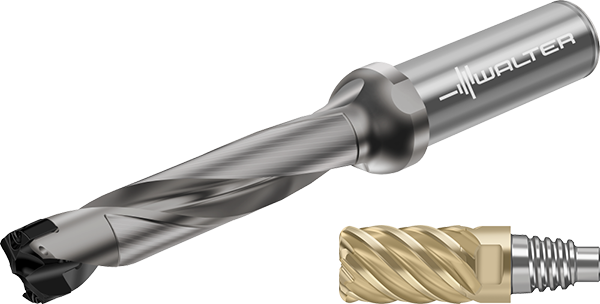
Regrinding extends tool life
One of the most effective ways to manage tool costs is maintenance and regrinding of tools. The operating costs of carbide drills and milling cutters can be reduced significantly when they are reground to their original geometry and recoated. When done correctly, a reground tool performs very close to a new tool, allowing the same tool to be used in production for a much longer time.
Regrinding tools is often a much more cost-effective option than purchasing new ones. As carbide accounts for a significant share of the tool’s manufacturing cost, reusing the same tool body yields clear savings, especially when raw material prices are on the rise. A systematic regrinding cycle reduces the need to purchase new tools and helps keep tool costs better under control. When there is a clear process in place in which worn tools are collected, serviced and returned to production, tool life increases and inventory management becomes easier. At the same time, material waste is reduced, as the carbide remains in use longer before the tool is finally removed from circulation.
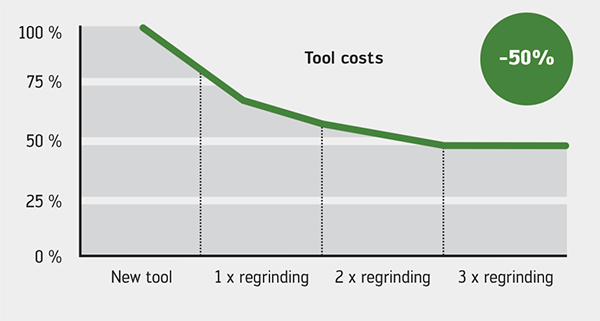
Regrinding carbide tools extends tool life and can reduce tool costs by up to about 50 percent.
Correct cutting data determine tool life
Tool life depends significantly on whether the tools are used with cutting data according to the manufacturer’s recommendations. Excessive feeds or cutting speeds can wear the tool out quickly, while values that are too conservative weaken productivity and increase machine time.
Modern digital tool selection programs make it easier to define optimal cutting data. Advanced applications can take into account the workpiece material, tool properties and the performance of the machine tool. This gives the machine shop realistic starting values that help balance tool life and productivity.
Special tools reduce the number of operations
Special tools can generate significant savings in series production. A tool designed for a specific machining task can combine several operations into a single one.
When one special tool replaces several standard tools, the capital tied up in tools also decreases. At the same time, tool positions in the machine are freed up and the number of tool changes is reduced, which shortens machining time and improves machine utilisation. When fewer tools are needed for a job, tool costs decrease and the process becomes simpler.
The use of special tools has therefore become more common, especially in series production where even small improvements in machining time per part quickly accumulate into significant savings.
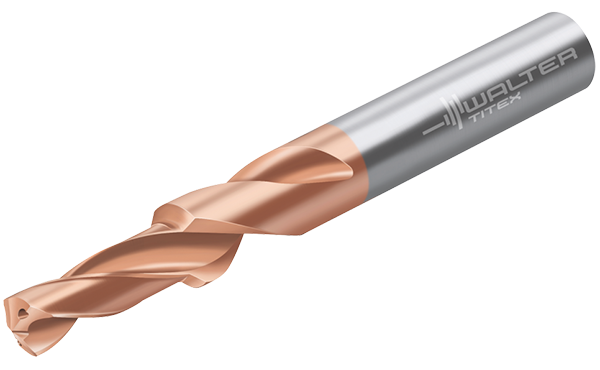
When drilling with several different diameters and chamfering the holes can be done with the same tool, the need for separate tools decreases, tool costs go down and production efficiency increases.
Tool inventory management affects tied-up capital
Tool costs are also linked to the value of the tool inventory. As the price of carbide has risen in recent years, a significant amount of capital is tied up in tool inventories in many machine shops. Stocks are often increased as a precaution so that production does not stop due to possible delivery delays. However, this ties up the company’s capital in tools that are not necessarily needed continuously in production.
Modern tool vending systems offer a solution to this, as they make it possible to monitor and manage tool use and stock levels accurately and systematically. Based on the data collected by the vending system, tool consumption can be analysed and stock levels dimensioned according to actual demand. In this way, the value of the tool inventory can be optimised to be as low as possible without causing production interruptions due to missing tools, or allowing inventory value to grow unreasonably high.
With tool vending systems, real-time information about tool consumption is available, which makes it easier to optimise inventory and plan orders. At the same time, the time spent searching for tools is reduced and it is ensured that the right tools are always available. The systems can also steer the use of reground tools before new ones are taken into use, which supports efficient lifecycle management and helps utilise tools as far as possible before removing them from circulation.
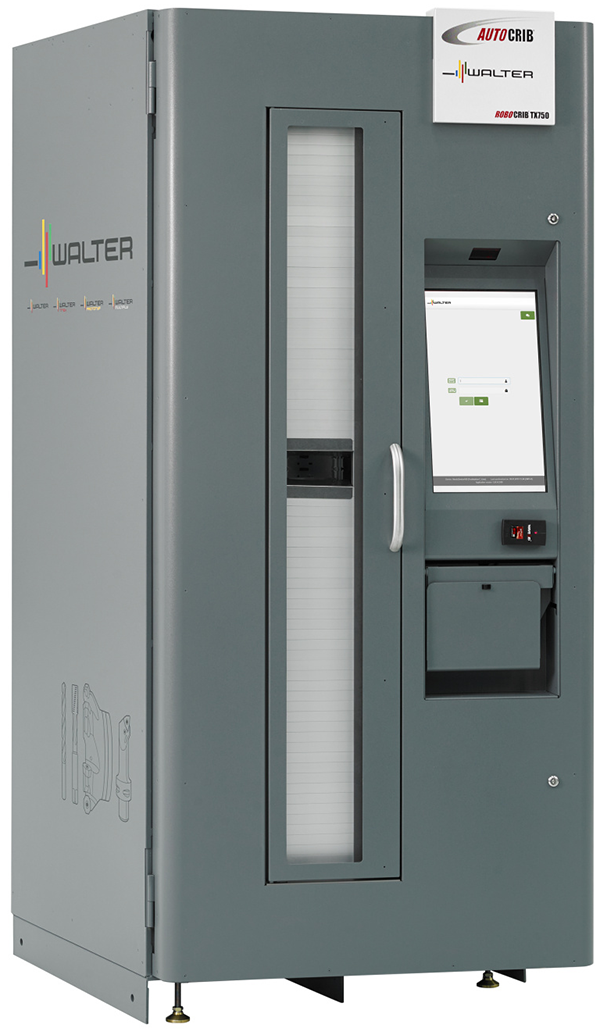
The Walter Toolstation tool vending system simplifies tool storage and consumption tracking and helps keep the value of the tool inventory under control.
Recycling carbide as part of the material loop
Used carbide can be returned to production, so that the same raw materials end up once again in the manufacture of new tools. A refund is paid for recyclable carbide, which at current price levels can be significant. In many machine shops, broken or worn-out carbide tools easily end up in the scrap bin, even though the material value tied up in them is still considerable. In practice, a discarded carbide tool lying in a scrap box represents company capital that can be released back into use by recycling the material and using the refund received to purchase new tools.
Recycling also has a broader impact on the market. When carbide is returned to industrial use, the pressure to mine and produce new raw materials is reduced. In the current situation, where demand for carbide has grown strongly and availability has occasionally tightened, bringing the material back into circulation helps, in part, to balance the market and curb cost increases. At the same time, machine shops can ensure that this valuable raw material remains in industrial use for as long as possible instead of going to waste.
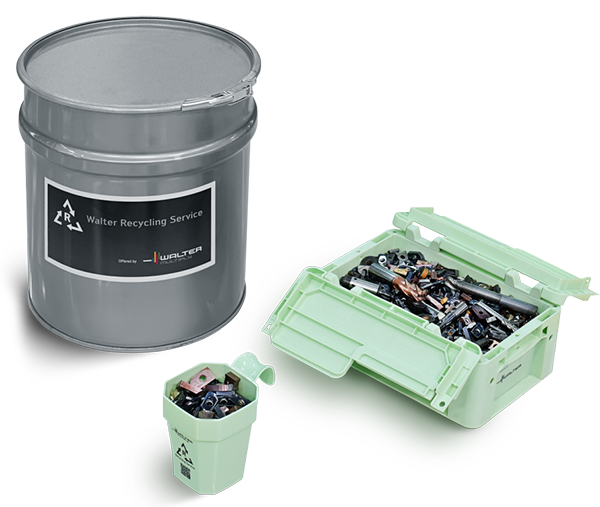
Used carbide tools should be collected, as their recycling generates a refund and the valuable material is returned to industrial use.
Partnerships and services support tool management in machine shops
Changes in the tool market have increased the need for comprehensive solutions in which tool procurement, use, maintenance and recycling form a coherent whole. When tool lifecycles are managed systematically and production processes are developed together with experts, machine shops can improve productivity and control costs even when raw material prices and availability fluctuate.
Camcut is the official distributor of Walter Tools and offers machine shops a comprehensive package of cutting tool products and services. In addition to standard tools, the range includes special tool solutions that can streamline production processes, especially in series manufacturing. With the Walter Tools Xpress special tool service, customised tools can be supplied quickly; these tools combine several operations into one tool solution and reduce machining times.
Correct cutting data and methods are also central to productivity improvements. The Walter GPS application developed by Walter Tools serves as a digital tool navigator for tool selection and defining cutting data. The application takes into account the tool, the workpiece material and the machine tool’s properties, so that the recommendations correspond to real production conditions and help to optimise machining processes.
Lifecycle management of tools also includes maintenance and material circulation. Camcut offers Walter Tools’ regrinding service and a carbide recycling service, which make it possible to return tools that are no longer in use back into the manufacturer’s material loop. The recycled carbide is used in the manufacture of new tools, which reduces the need for new raw materials and keeps the valuable material in use for as long as possible.
Tool management can also be made more efficient through automation. Camcut supplies Walter Toolstation tool vending systems, which enable digital storage, consumption tracking and order management of tools. The system helps to optimise stock levels, monitor tool use and ensure that the right tools are always available in production.
More information about tool regrinding, carbide recycling, special tools and other solutions related to tool management is available from Camcut’s experts. They help assess how different services can support machine shops in managing tool costs and developing production in a situation where tool prices are on the rise.


