
News
Growth in carbide demand is reflected in machine shops’ tooling costs

Rising carbide demand is seen in higher tool prices in machine shops and highlights the importance of lifecycle management
In recent years, the prices of cutting tools have clearly increased. Behind this trend are changes in global supply chains, the geopolitical situation, and the sharply rising demand for the raw materials used in carbide. Carbide is a key raw material in many industrial applications, and its demand has in recent years grown faster than production capacity. This has been reflected in the tool market as higher prices and occasional availability challenges.
For machine shops, this situation means a growing need to review tool usage more comprehensively than before. Managing tooling costs is not based solely on competing on purchase price; the productivity of the tool over its entire life cycle, its service life, and the stability of the machining process are becoming increasingly important. When tool use is examined as part of the entire production process, costs can be controlled more effectively even in a changing market environment.
The real cost of a tool is generated in use
The impact of a cutting tool on total production costs is often greater than the purchase price alone suggests. In a machine shop, costs are also generated by tool change frequency, downtime, and potential quality deviations. A tool that performs predictably and has a long life can, overall, be significantly more economical than a cheaper but short-lived alternative.
Productivity can also be improved by optimizing tool use as part of the entire machining process. Tool geometry, coating, cooling, and chip control all affect how efficiently material can be removed and how stably the process runs. When these factors are matched with the properties of the workpiece material and the machine tool, tool life and process stability often improve significantly.
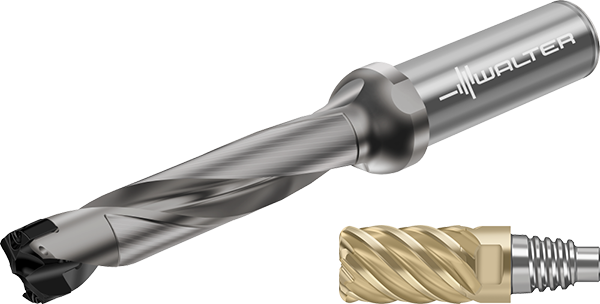
Tooling solutions can also affect costs by selecting the right tool type for the application. In many cases, solid carbide tools can be supplemented or replaced by indexable insert mills and drills, exchangeable-tip drills, and milling tools with replaceable inserts.
Because the price of carbide has risen significantly in recent times, the amount of carbide used in a tool has an increasing impact on its total cost. For this reason, it is worth minimizing the amount of carbide in the tool whenever it is technically feasible. In solutions based on replaceable indexable inserts or carbide tips, the wear parts can be renewed without replacing the entire tool, which reduces costs especially in series production.
Reconditioning extends tool life
One of the most effective ways to control tooling costs is tool maintenance and reconditioning. The operating costs of carbide drills and mills can be reduced significantly by regrinding them to their original geometry and recoating them. When done correctly, a reconditioned tool performs very close to a new tool, allowing the same tool to be used in production for a much longer time.
Reconditioning tools is often a much more economical option than purchasing new ones. Since carbide accounts for a significant share of tool manufacturing costs, reusing the same tool body delivers clear savings, especially in a situation where raw material prices are rising. A systematic regrind cycle reduces the need to purchase new tools and helps keep tooling costs under better control. When there is a clear process in place for collecting worn tools, servicing them, and returning them to production, tool life is extended and inventory management becomes easier. At the same time, material waste is reduced because the carbide remains in use longer before the tool is finally retired.
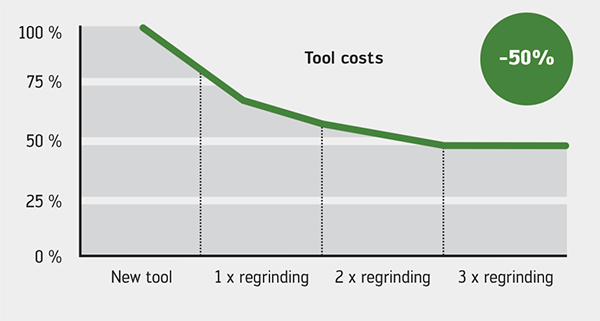
Regrinding carbide tools extends tool life and can reduce tooling costs by up to about 50 percent.
Correct machining parameters determine tool life
Tool life depends greatly on whether the tools are used with machining parameters that follow the manufacturer’s recommendations. Excessive feeds or cutting speeds can wear out the tool quickly, while overly conservative values reduce productivity and increase machine time.
Modern digital tool selection programs make it easier to determine optimal machining parameters. Advanced applications can take into account the workpiece material, tool characteristics, and machine tool performance. This way, the machine shop receives realistic starting values that help balance tool life and productivity.
Special tools reduce process steps
Special tools can deliver significant savings in series production. A tool designed for a specific machining task can combine several operations into a single process.
When one special tool replaces several standard tools, the capital tied up in tools is also reduced. At the same time, tool positions in the machine are freed up and the number of tool changes is reduced, which shortens machining time and improves machine utilization. When fewer tools are needed for a job, tooling costs decrease and the process becomes simpler.
The use of special tools has therefore become more common, particularly in series production, where even small improvements in machining time per part quickly add up to substantial savings.
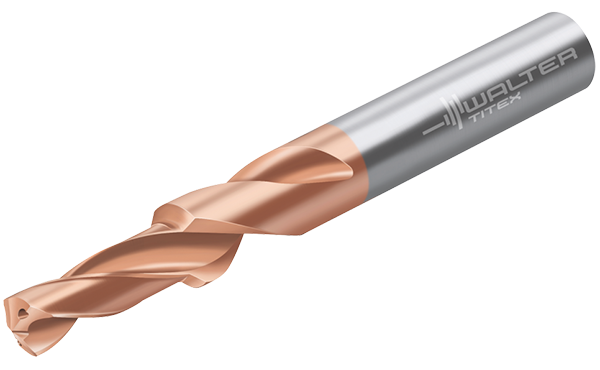
When drilling multiple diameters and chamfering holes can be done with the same tool, the need for separate tools decreases, tooling costs go down, and production efficiency increases.
Tool inventory management affects tied-up capital
Tooling costs are also linked to the value of the tool inventory. As carbide prices have risen in recent years, a considerable amount of capital is tied up in tool inventories at many machine shops. Stock levels are often increased “just in case” to prevent production stoppages caused by possible delivery delays. However, this ties up company capital in tools that are not necessarily needed continuously in production.
Modern tool vending systems offer a solution to this challenge, as they make it possible to track tool usage and inventory levels precisely and manage them systematically. With the data collected by the vending system, tool consumption can be analyzed and inventory levels sized according to actual needs. This allows the value of the tool inventory to be optimized to the lowest reasonable level without causing production interruptions due to missing tools or letting inventory value grow excessively.
With tool vending systems, real-time information on tool consumption is available, which facilitates inventory optimization and order planning. At the same time, the time spent searching for tools is reduced, and it is ensured that the right tools are always available. The systems can also prioritize the use of reconditioned tools before introducing new ones, which supports efficient life cycle management and helps get the maximum use out of tools before they are removed from circulation.
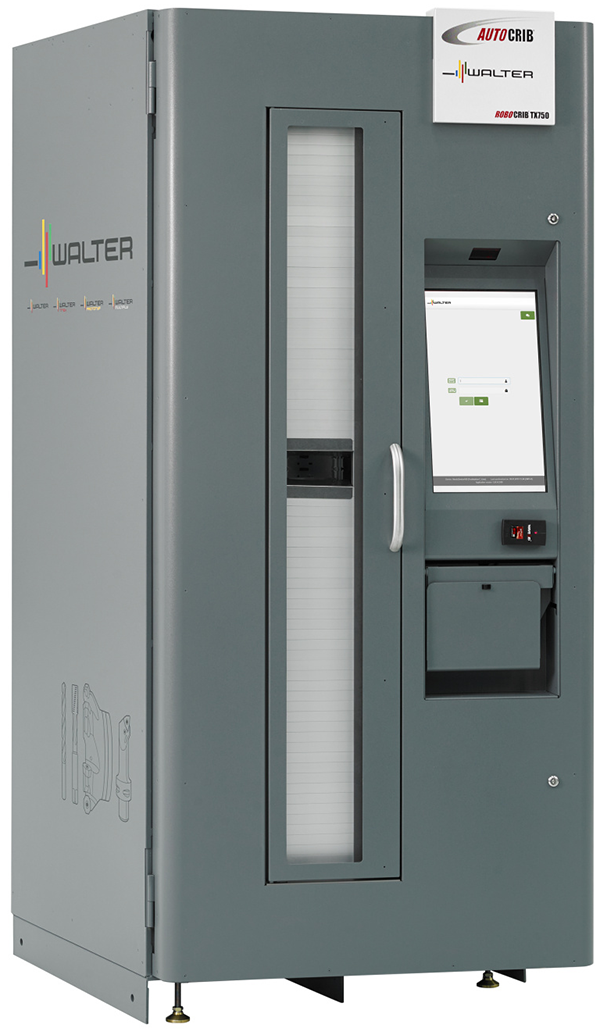
The Walter Toolstation vending system makes it easier to store tools, track consumption, and keep the value of the tool inventory under control.
Carbide recycling as part of the material loop
Used carbide can be returned to production so that the same raw materials end up being used again in the manufacture of new tools. A rebate is paid for recyclable carbide, which at the current price level can be substantial. In many machine shops, broken or fully worn-out carbide tools easily end up in the scrap bin, even though the material value tied up in them is still significant. In practice, every carbide tool lying in a scrap container represents company capital that can be released back into use by recycling the material and using the rebate to purchase new tools.
Recycling also has a broader impact on the market. When carbide is returned to industrial use, the pressure on mining and producing new raw materials is reduced. In the current situation, where demand for carbide has grown strongly and availability has occasionally tightened, returning material to circulation helps, in part, to balance the market and curb cost increases. At the same time, machine shops can ensure that this valuable raw material remains in industrial use as long as possible instead of going to waste.
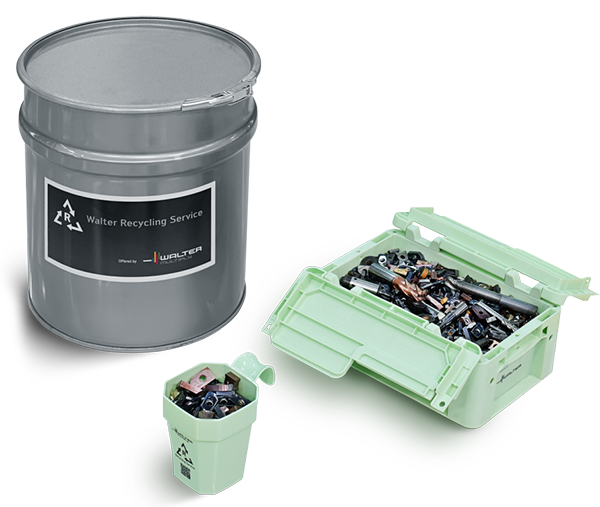
It is worth collecting used carbide tools, as you receive a rebate for recycling and the valuable material is returned to industrial use.
Partnership and services support machine shops’ tool management
Changes in the tool market have increased the need for comprehensive solutions in which tool procurement, use, maintenance, and recycling form a unified whole. When tool life cycles are managed systematically and production processes are developed together with experts, machine shops can improve productivity and control costs even as raw material prices and availability fluctuate.
Camcut is the official distributor of Walter Tools and offers machine shops a comprehensive range of cutting tool products and services. In addition to standard tools, the product range includes special tooling solutions that can improve production efficiency, especially in series manufacturing. With Walter Tools’ Xpress special tool service, customized tools can be delivered quickly. These tools combine several operations into a single tool solution and shorten machining times.
Correct machining parameters and methods are also key in improving productivity. Walter Tools’ Walter GPS application serves as a digital tool navigator for tool selection and for defining machining parameters. The app takes into account the tool, the workpiece material, and the machine tool’s characteristics, so the recommendations reflect real production conditions and help optimize machining processes.
Tool life cycle management also includes maintenance and material circulation. Camcut offers Walter Tools’ reconditioning service and a carbide recycling service, which allow tools that are no longer in use to be returned to the manufacturer’s material cycle. Recycled carbide is used in the manufacture of new tools, reducing the need for new raw materials and keeping this valuable material in use for as long as possible.
Tool management can also be enhanced with automation. Camcut supplies Walter Toolstation vending systems, which enable digital management of tool storage, consumption tracking, and ordering. The system helps optimize inventory levels, monitor tool usage, and ensure that the right tools are always available in production.
More information about tool reconditioning, carbide recycling, special tools, and other tool management solutions is available from Camcut’s experts. They can help assess how different services can support a machine shop in controlling tooling costs and developing production in a situation where tool prices are on the rise.


