
News
What’s new in Walter Tools 2026-1 product innovations for machining?

Walter Tools launches new tools and product expansions tailored especially for serial production machining needs.
Walter Tools is introducing new tools and extensions tailored especially for the machining needs of series production. The new products cover turning, drilling, threading, milling and toolholding. Their development has focused on chip control, ease of use and process reliability in different production environments.
As the official Walter Tools distributor, Camcut is making these new products available through its online store, which offers real-time stock availability, customer-specific pricing, comprehensive product information, and downloadable 3D models for CAM programming. Below we review the key innovations and their typical applications in practical machining.
New turning insert grades for ISO M materials
Walter is expanding its turning tool portfolio with new Tiger·tec® Gold grades WMP20G and WMP30G, designed for turning bright steels in the ISO M material group. These grades are suitable for a wide range of austenitic, ferritic, martensitic and duplex stainless steels, where machinability varies and cutting conditions are often demanding.
The carbide microstructure of the new turning insert grades is designed to balance tool body toughness and cutting-edge wear resistance. In practice, this means the indexable insert withstands interrupted cuts, notch wear and edge chipping better than before, while still providing good wear resistance in continuous cutting. Walter Tools’ patented multilayer Tiger·tec® Gold CVD coating supports this by improving resistance to both flank and crater wear.
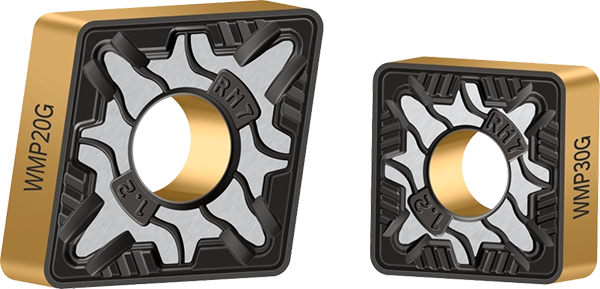
WMP20G serves as a general-purpose grade especially for austenitic and duplex steels where built-up edge, work hardening and continuous cutting are present. It is well suited to stable turning where good surface finish and even wear are required. The tougher WMP30G is aimed at heavier and interrupted cutting conditions, such as welded parts, castings and other uneven surfaces. It is particularly suitable for ferritic and martensitic stainless steels, and for applications where the cutting edge is subject to impact and tool load varies.
The new RM7 geometry has been developed for medium and heavy roughing. Its reinforced cutting edge improves durability in uneven and impact-generating conditions, and the geometry is typically suited to depths of cut of about 1.0–8.0 mm and feeds of 0.25–0.85 mm/rev. This enables efficient material removal and controlled chip formation even in demanding applications.
Extensions to the patented Groov·tec™ GD system
Walter is expanding its Groov·tec™ GD parting and grooving system with new toolholders and insert options aimed at more stable and better controlled grooving. The system is based on the GD26 insert, whose patented double-sided serration increases the contact area between insert and holder, improving clamping rigidity and reducing insert movement during cutting, especially under demanding conditions.
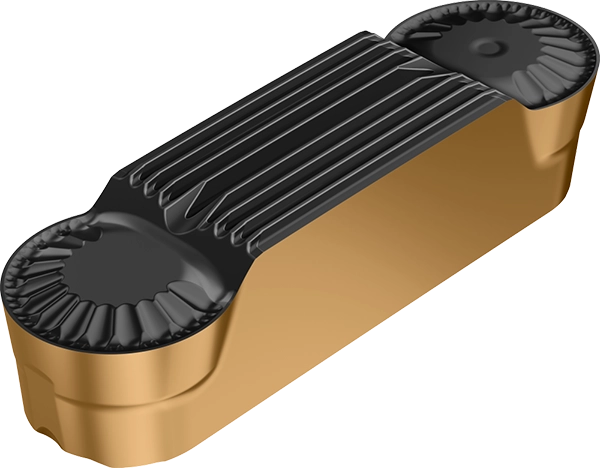
The Groov·tec™ GD range covers axial and radial grooving, parting-off and internal grooving applications. The range has been supplemented with new holders, geometries and sizes, such as 8 mm inserts designed for heavier applications. The system is ideal where reliable chip control and consistent groove and part-off quality are required.
Solutions for Swiss-type automatic lathes and micro turning
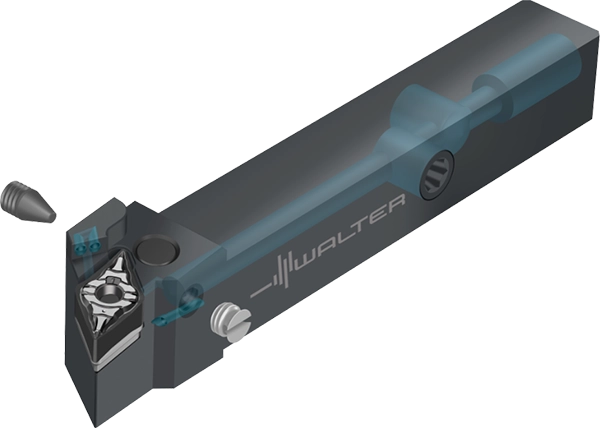
The tangential WT26 system, designed for Swiss-type automatic lathes, is being expanded to cover a wider range of turning, grooving and threading applications. The compatibility of different insert types with the same toolholder simplifies tool management and reduces setup times. Precision-ground inserts support stable cutting and consistent surface quality even at small diameters. WT26 tools use a unique 3D-printed coolant nozzle whose channel geometry is optimized to direct coolant efficiently and precisely at the cutting zone.
Turning toolholders designed for ISO-standard insert geometries use the side-clamping SmartLock solution known from Walter DX18 parting and grooving tools. The insert can be changed without removing the holder in Swiss-type automatic lathes, speeding up insert changes and improving machine utilization. The rigid, one-piece toolholder design increases stiffness and repeatability, especially in series production. The tools feature three coolant channels that provide both top and bottom coolant supply directly to the machining zone. This improves chip breaking, facilitates chip evacuation and reduces thermal load, particularly when using high-pressure coolant. The new ISO-standard Swiss turning toolholders are available in 12×12 mm and 16×16 mm shank sizes for CN..12, DN..11 and WN..06 ISO inserts.
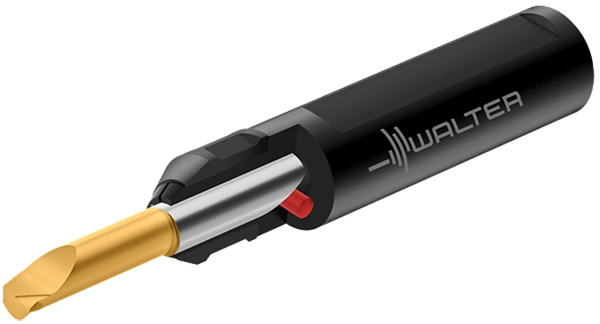
The WB system designed for internal micro turning is being expanded to cover turning at extremely small diameters, down to 0.3 mm. New toolholders for WB micro turning shanks have also been introduced: the through-coolant W4280 enables effective coolant delivery directly to the cutting zone, while the W4291 holder with collet clamp and adjustable internal coolant channels allows coolant direction to be tailored to the application. The W4282 holder is designed for tools under 2 mm. Its eccentric design directs coolant efficiently to the cutting edge even with very small tools. At the same time, the design reduces nib runout caused by orientation error relative to the turning centerline, improving tool setup and increasing accuracy and repeatability in small-geometry turning. All WB holders also feature a positioning solution for the shank that ensures repeatable orientation of the WB tool in the holder.
Extensions to Drion·tec® E-Peak D5150 exchangeable-tip drilling
The advanced Drion·tec® E-Peak D5150 exchangeable-tip drill, introduced in autumn 2025, is being expanded to cover diameters from Ø9.00–17.99 mm and drilling depths of 3xD, 5xD and 8xD. The D5150 is based on a single insert geometry suitable for multiple material groups. A rigid body design, optimized flute geometry and precise tip interface support stable drilling even at higher feeds and greater depths.
The exchangeable-tip design is particularly beneficial where carbide cost has a significant impact on drilling tool cost. The worn drill tip can be replaced without renewing the entire tool, improving cost control.
Solutions for solid carbide milling in demanding materials
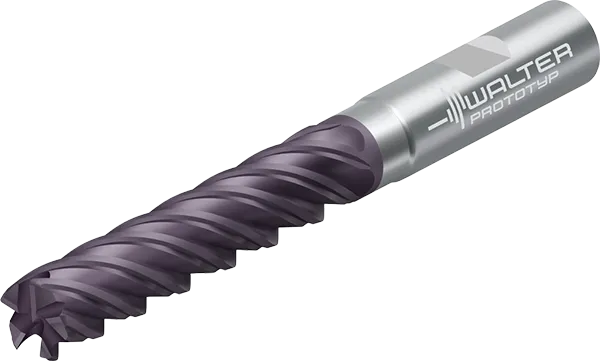
The new Xill·tec™ Aero MC331 and MC333 end mills are designed for general use across different material groups, with a focus on demanding ISO M and ISO S applications such as aerospace machining. A light-cutting geometry and optimized flute design enable high feeds and efficient material removal in both slotting and dynamic milling. The Xill·tec™ Aero series is available in 5- and 7-flute versions, with (MC333) or without (MC331) chip breakers. Unequal flute spacing reduces vibration and improves process stability, extending tool life.
The WK40EA coating used on these tools is a fine-structured, wear-resistant ACN coating that supports tool performance in demanding materials and at high cutting speeds.
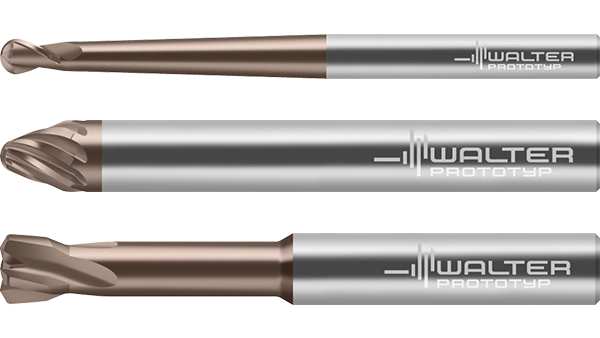
For hardened steels and other difficult-to-machine materials, Walter is introducing new ISO H series end mills such as the MD480, MD780 and MD880 models. These tools emphasize wear resistance, a stable cutting process and good surface finish, especially in finishing operations.
The MD480 radius end mills are suitable for precise copy milling of complex 3D surfaces. The through-coolant MD780 orbital drill/mill is designed for helical interpolation milling when opening holes and pocket geometries. The conical MD880 segment radius cutters are available in 4- and 8-flute versions and are particularly suitable for fast finishing of 3D surfaces in 5-axis machining.
The WB10TS grade used for these tools is based on a TiAlSiN HiPIMS coating optimized for machining ISO H materials in the hardness range of approximately 48–65 HRC. The coating provides high wear resistance and uniform wear behavior, improving process reliability in demanding applications.
New Xtra·tec® S3 high-feed roughing mill
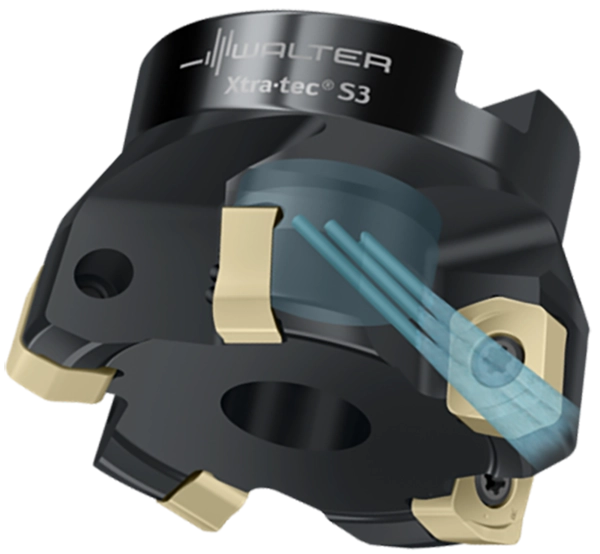
The Xtra·tec® S3 M6420 mill is designed for high-feed roughing, combining high metal removal rates with a stable process. The S3 name refers to the tool’s key characteristics: Stability, coolant and chip evacuation Supply, and structural Strength. The four-edged, double-sided inserts improve cost-efficiency, and their design allows depths of cut up to 2 mm and tooth feeds up to 3 mm. A newly developed flute geometry, for which a patent has been applied, together with insert support features in the pocket, reduces deflection and improves chip control at high feed rates.
The tool body design prioritizes cooling and chip evacuation. Up to three optimized coolant channels per insert seat direct coolant efficiently into the cutting zone and can increase flow by up to about 48%, improving heat management and tool life. At the same time, a larger contact area between insert and body increases stability.
New ConeFit adapters for ER systems
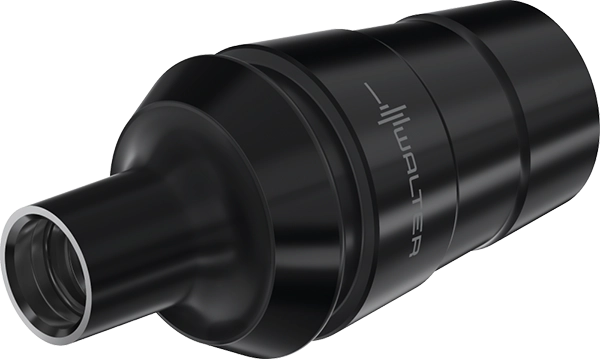
Walter is expanding its ConeFit modular toolholding system with new AB771 adapters, designed for direct use in ER collet chuck systems without a separate collet. This simplifies the assembly and reduces potential play and runout in the clamping. The wide use of ER systems makes these adapters easy to implement in many machine tool environments, such as live tooling on lathes. The new AB771 ConeFit adapter is available in ER16–ER32 sizes and supports internal high-pressure coolant up to 80 bar.
The modular ConeFit design allows different milling heads to be used with the same adapter. Since the exchangeable cutting head can be replaced directly in the machine without re-measuring the tool, setup times are reduced and series production runs more smoothly. The modular concept based on interchangeable carbide heads provides a cost-effective solution to offset the general rise in tool prices caused by increasing carbide costs.
New solutions support production development
The Walter 2026-1 product innovations are designed especially for the needs of series production, where consistent cutting and process control at higher cutting parameters are critical. Modular and compatible tool systems allow the same platform to be used in multiple applications, reducing the number of tools needed and simplifying tool management.
Camcut’s specialists will help you choose suitable tool solutions and develop machining processes according to your practical production requirements. You can find more information about the new products on Camcut’s website, and you can also contact our experts directly. Together we can assess which new product innovations will best support productivity improvements in your specific production environment.


